

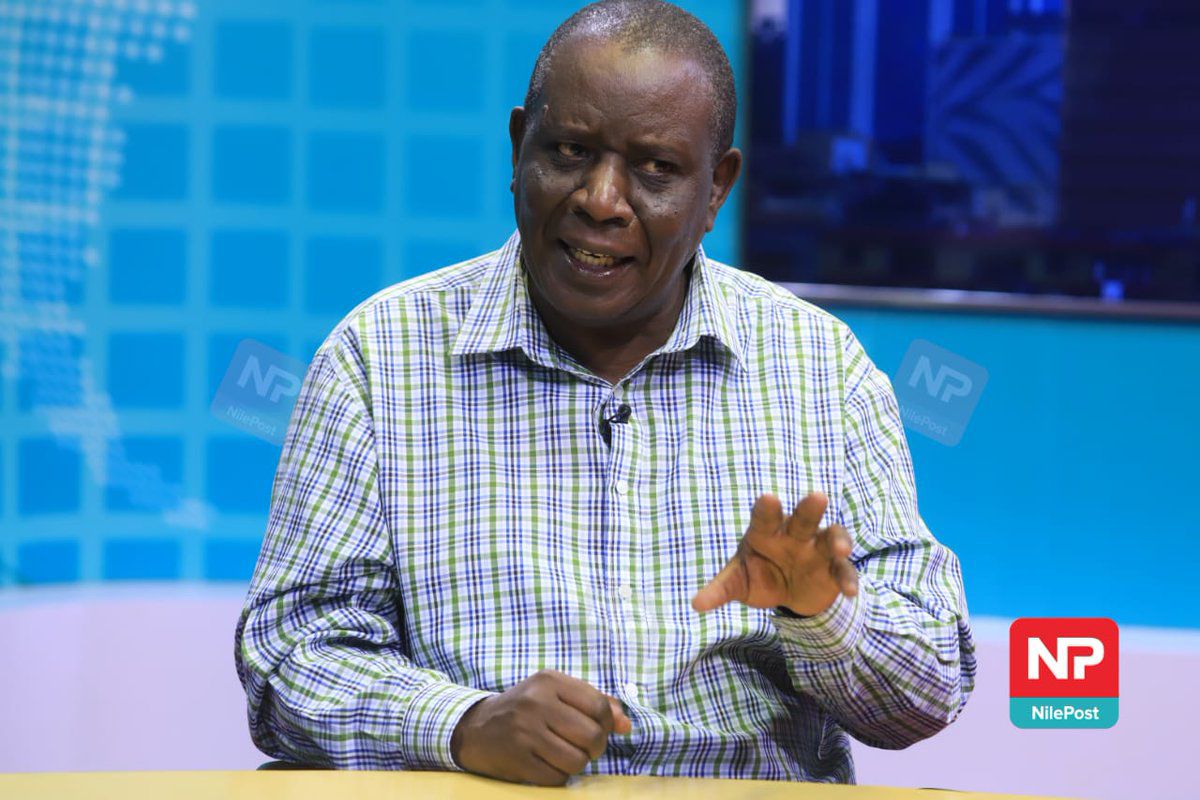
Makerere University lecturer and political analyst Prof. Mwambutsya Ndebesa has raised serious concerns about the integrity and transparency of Uganda’s electoral process, warning that restricting public observation during vote counting and tallying undermines the credibility of elections.
Speaking on NBS Morning Breeze on Wednesday, Prof. Ndebesa said the legitimacy of any election rests on three fundamental principles: freedom, fairness and transparency.
“The integrity of an election is determined by whether it is free, fair and transparent. If you deny people the right to witness the counting and tallying of votes, then that election will not be transparent and will fail the test of integrity,” he said.
While welcoming the introduction of biometric voter verification machines as a positive step towards curbing voter impersonation and multiple voting, Prof. Ndebesa cautioned that technology alone cannot eliminate all forms of electoral malpractice.
“Those biometric machines may stop multiple voting, but they may not stop ballot stuffing,” he noted.
He warned that without strong public oversight during counting and tallying, technology could create a false sense of security rather than guaranteeing genuine transparency.
Prof. Ndebesa strongly advocated for allowing voters to remain present during the counting and tallying of votes at polling stations—within reasonable limits—to enhance transparency and public trust.
“For transparency purposes, voters should, to a certain level, be allowed to be around during vote counting. They should witness how the tallying and counting are done to ensure the process is credible,” he said.
He pointed out that Uganda’s electoral law provides that although voting ends at 4:00pm, vote counting must begin immediately at polling stations and be conducted openly and audibly, allowing voters who wish to observe to do so.
Prof. Ndebesa also expressed skepticism about relying solely on polling agents and election observers to safeguard electoral integrity, citing past instances of compromise.
“Polling agents have been bribed before. We can’t leave the responsibility of monitoring elections entirely to them. Election observers are also too few to cover every polling station in the country,” he said.
He argued that broad citizen participation in observing the process is a critical additional safeguard.
In a wider critique of governance, Prof. Ndebesa cautioned against equating legality with justice.
“Something being in the law doesn’t necessarily make it just. Apartheid was once legal, but it was wrong,” he said.
He further pointed to structural challenges within the state, highlighting the implications of prolonged incumbency on institutional independence.
“We are in a situation where someone has been in office for 40 years and all the judges have been appointed by him. That places the country in a unique and difficult position,” he said.
Prof. Ndebesa emphasized that elections are not merely political exercises but issues of national security, democracy and good governance.
“We have an electoral process that is critical to national security and democracy, yet controversies already surround it,” he said.
He concluded by calling for stronger safeguards against electoral malpractice, urging openness in addressing systemic weaknesses.
“Ugandans have developed a culture of wanting to cheat. There must be safeguards to prevent that cheating,” he said.